.png)

AI & Creative Workflows

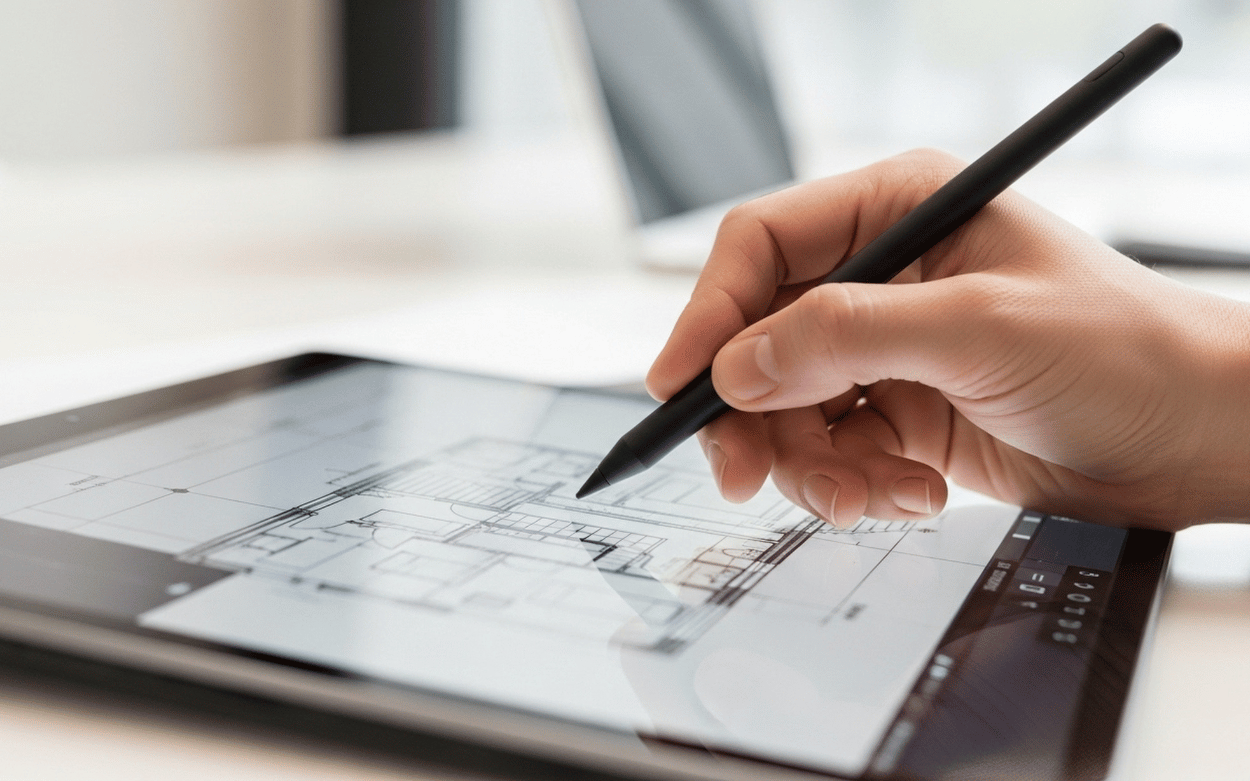
AI tools are fundamentally changing how designers work in 2026. From crafting intricate Midjourney prompts to making precision edits in Adobe Firefly, creators now generate surreal imagery and complex layouts in seconds. Zhou et al. found in their PNAS Nexus study that text-to-image AI delivers measurable creative advantages:
- Productivity increases by 25%
- Peak novelty levels rise
- Human judgment remains essential for filtering outputs and ensuring coherence
What emerges is a powerful partnership where technology and artistry work together to scale content production for global brands.
Core Applications
Iterative prototyping has become one of AI's strongest capabilities. Designers can generate 100 distinct collage variants to explore different visual directions in the time it once took to create just a handful. The technology mimics organic imperfections like puffy textures and subtle gradients while bypassing countless manual hours. A 2025 survey of 309 workers revealed how AI enhances the creative process:
- Increases perceived job autonomy
- Provides valuable feedback mechanisms
- Positively impacts overall employee creativity
Designers serving Philippine markets and other culturally specific audiences benefit from ethical prompting that ensures genuine cultural relevance rather than stereotyped aesthetics.
Benefits for Marketers
AI-assisted workflows may cut production time by roughly 70%, which frees marketing teams to focus on strategy, audience research, and campaign optimization. Personalization capabilities allow AI systems to tailor LinkedIn banners and social media graphics to individual user data. A single master design can generate thousands of customized variations. In fintech and other specialized sectors, fraud detection visuals gain user trust by making abstract security concepts tangible and understandable.
Best Practices
Effective prompt engineering makes a significant difference in output quality. Designers achieve better precision by specifying detailed parameters like "Visayan motifs, playful typography, 2026 surrealism aesthetic" rather than vague descriptions. AI outputs serve as starting points that need human refinement. Tweaking generated assets in Photoshop ensures brand voice alignment and adds finishing touches that algorithms might miss. Building a comprehensive tool stack helps too. Combining platforms like Runway for motion graphics with Looka for logo generation creates seamless campaigns across multiple dimensions.
Challenges and Fixes
Overreliance on AI carries real risks. Doshi et al. discovered in their 2024 study a critical paradox about generative AI:
- Individual outputs become more creative
- Collective diversity of ideas within groups diminishes
- Generic outputs lacking distinctive brand personality may emerge
Hybrid workflows position AI as a collaborative partner rather than a complete replacement for human judgment. Responsible creators watermark AI-generated art and cite their tool usage transparently. They stay vigilant about copyright implications. Balancing technological efficiency with human oversight helps preserve the authenticity and cultural sensitivity that audiences value in 2026's competitive visual landscape.
Related Articles


ZOKKO
Studio

